

You’re reading an article or a product description and suddenly terms like “Live Resin”, “Phenos”, or “CoA” are flying around. Sounds professional, but you’re not really sure what they mean. Do you actually know the difference between a “Batch” and a “Pheno”?
No worries, you’re not alone. The hemp world has developed its own set of terms. Let’s call it a mix of botanical jargon, lab lingo, and street culture. To help everyone out, I’ve put together this glossary as a little guide. I wish I’d had something like this myself when I first started getting into the topic.
Here you’ll find everything from the absolute basics to terms that even experienced growers have to think about for a second. Next time, you’ll know exactly what’s going into your bag.
A for Beginning: Checking Out the First Terms
Even if you already know a bit, there are still terms that can make you pause. Let’s start at the beginning.
- 420: Probably the most famous code word in cannabis culture. The origin is debated, but 4:20 pm is considered an iconic time in the scene. Today, “420 friendly” on product pages or profiles signals an open attitude toward cannabis.
- Auto-flower: A type of plant that flowers independently of the light cycle because it contains Ruderalis genes. A huge topic in the growing scene because the harvest matures faster.
-
Aroma: Often used on legal CBD products to describe flowers or flower blends that aren’t meant for consumption, but are marketed as room fragrance or decoration.
B for Basics Everyone Should Know
Blunt is probably one of the most mentioned terms out there. Traditionally, it means a cigar wrapper filled with hemp material. In the legal CBD world, the term sometimes pops up for aromatic flower products that look similar but serve completely different purposes.
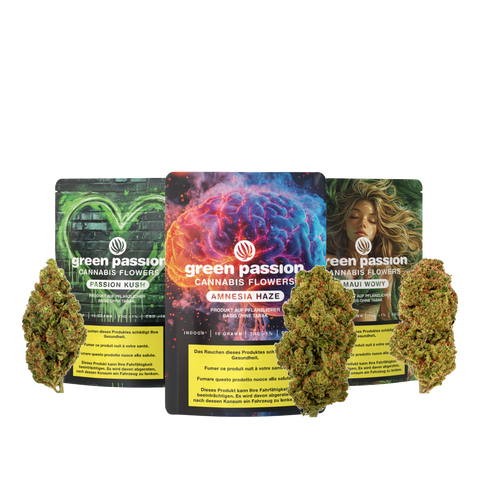
Then there’s Bud. This refers to the flower clusters of the hemp plant—what you’ll find as a CBD flower in the shop. The term comes from English and simply means “bud.” In the scene, people say “bud” just as often as “flower.”
- Batch: A product lot, often listed on lab reports and product labels so you can match up the test results.
- Broad Spectrum: An extract category that contains several cannabinoids, but THC has been specifically removed so the content stays below the legal limit.
-
Budder: A soft, creamy consistency in hemp extracts. The name comes from its butter-like appearance.
C for CBD and More
The key term: CBD stands for cannabidiol, a naturally occurring cannabinoid in the hemp plant. You’ll find CBD products as oils, capsules, cosmetics, or flowers. Legally, CBD is allowed in Switzerland as long as the THC content stays below 1%.
CBG (cannabigerol) and CBN (cannabinol) are other cannabinoids that show up in products. CBG is often called the “mother of cannabinoids” because other cannabinoids develop from it. CBN forms as THC breaks down and is mainly found in older plant material. If you’re interested in CBG flowers, check out the CBG selection at Green Passion.
- Cannabinoids: The group of active compounds in the hemp plant. Over 100 different ones are known, with CBD and THC being the most famous.
- Cannabinoid profile: The exact composition of all cannabinoids present in a product, usually listed on the lab report.
- Certificate of Analysis (CoA): The analysis certificate from an independent lab, documenting ingredients, cannabinoid profile, and any residues. Always publicly available at reputable shops.
- Crumble: A dry, crumbly extract consistency. One of many consistency terms borrowed from the American scene.
- Cure / Curing: The drying and ripening process of hemp flowers after harvest. Good curing significantly affects aroma, texture, and quality.
D for Details That Make a Difference
Dispensary is actually an American term for licensed cannabis shops. In Germany and Switzerland, it’s sometimes casually used for CBD shops, though that’s not technically correct.
Also interesting is Dab or Dabbing: This refers to a method of using extracts that’s well-known in the scene. The term comes up regularly in reviews and forums, but it’s not an instruction for use.
- Density: In the scene, an unofficial quality feature for flowers. Dense, tightly structured buds are often seen as a sign of careful cultivation.
- Decarboxylation: A chemical process where CBDA is converted into CBD by heat. Relevant for anyone working with raw plant materials.
- Distillate: A highly purified extract with a very high cannabinoid content. A clear to slightly yellowish liquid used in many vape products.
E to F: Extracts and Technical Terms
Entourage effect describes the interaction of different plant compounds. The theory behind it: cannabinoids, terpenes, and other plant compounds might interact with each other. Still being actively researched scientifically, but a much-discussed concept in the scene.
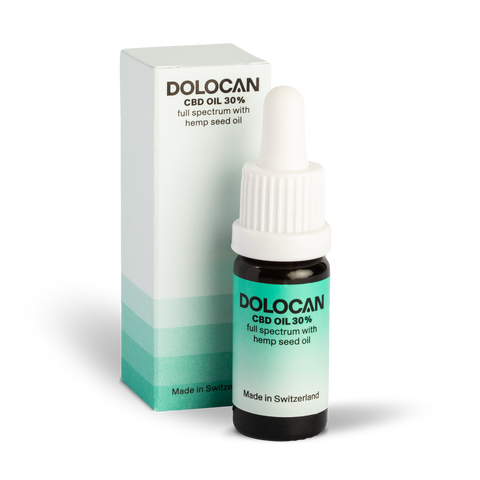
Full spectrum is the counterpart to broad spectrum: all naturally occurring cannabinoids are included, including THC, but only up to the legally allowed limit of max. 1% in Switzerland. For a good overview of THC and CBD content in different products, check out this blog article on CBD vs. THC flowers .
- Feminized Seeds: Seeds that produce almost 100% female plants, since these are the ones that develop the flowers with cannabinoids.
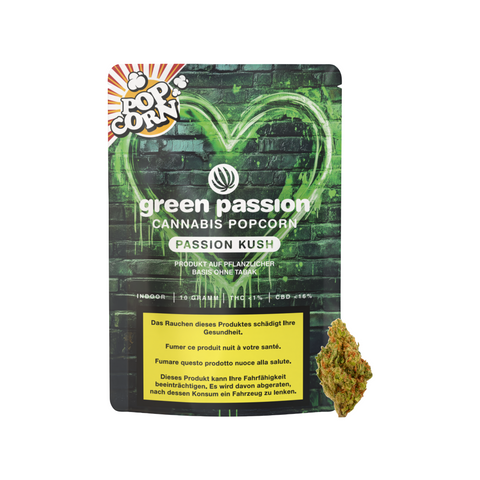
- Flower / Blossom: The inflorescences of the female hemp plant. Legally available as CBD aromatic blossom.
- Flush: In the grow scene, flushing the soil with clean water before harvest to reduce nutrient residues.
G to H: Grow Slang and Hemp Knowledge
Grow or Grow-Op means cultivating hemp, whether indoors, outdoors, or in a greenhouse. In the legal CBD sector, there are certified grows that are strictly regulated and produce products like aromatic blossoms.
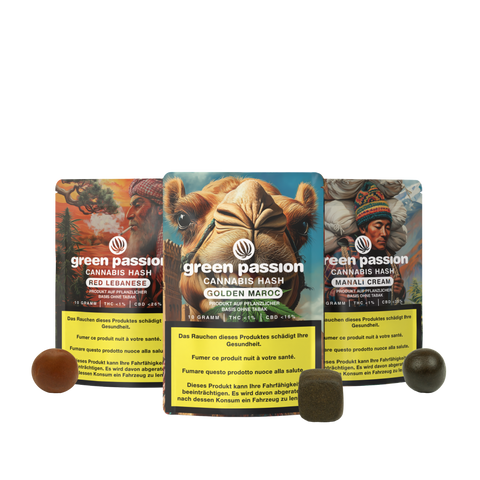
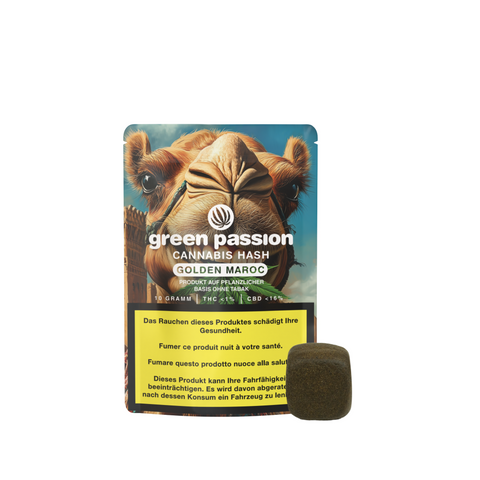
Hash is pressed resin from the hemp plant, one of the oldest hemp products around. In the CBD sector, there are legal hash varieties made from CBD hemp, for example as an aromatic product. The CBD hash selection shows how diverse the consistency and aromas can be: from creamy to crumbly to powdery. We've put together important facts about hash here.
- Hemp: English for Hanf. Often used in international product descriptions to distinguish industrial or CBD hemp from illegal cannabis.
- High CBD: Refers to varieties or products with an above-average CBD content. Marketing term, not a legally defined category.
- Humidity Pack: Small moisture packs placed in blossom packaging to maintain optimal humidity. BOVEDA is the best-known brand.
I to K: Isolates, Joints, and Consistency
Isolate (or CBD isolate) is the purest form of CBD: over 99% CBD, no THC, no other cannabinoids. White powder or crystals. The base for many in-house products because it's neutral in taste and versatile in use.
Keyword Indoor / Outdoor: Indoor blossoms grow in controlled environments under artificial light. Outdoor blossoms are grown outside. Greenhouse is in between. Quality and appearance differ, and that affects the price.
- Joint: Classic rolled form. In the legal context, the term is used for pre-rolled aromatic products that are explicitly not intended for smoking.
- Kief: The glandular resin of the hemp plant, which settles as a fine powder on blossoms. High concentration of cannabinoids and terpenes.
- Kush: Originally a variety name from the Hindu Kush mountains. Today, “Kush” is used as general slang for certain aroma and flavor profiles.
L to M: Labels and Market Vocabulary
Lab-tested or “laboratory tested” is not just a nice extra for CBD products, but actually standard. A reputable provider publishes CoAs issued by independent labs, documenting THC content and contaminants.
Live Resin is a term for extracts made from freshly harvested, non-dried plants. The aroma is considered especially fresh and intense because more volatile terpenes are preserved.
- Landrace: Original, non-bred varieties from specific regions of the world, such as Hindu Kush, Durban, or Acapulco Gold. The history of CBD-dominant varieties shows how these landraces were selectively bred into high-CBD strains.
- Limonene: A common terpene in hemp plants with a citrus-like scent. Often appears in aroma descriptions.
- Microdosing: A concept from the scene referring to very small amounts. Relevant in the CBD sector, but not an official dosage recommendation.
- Myrcene: The most common terpene in hemp, with an earthy, slightly fruity scent.
N to O: Niche Terms with Relevance
Nug: Slang for a single flower bud. Comes from the English “nugget” and describes compact, well-structured buds.
OG: Depending on context, stands for “Original Gangster” or “Ocean Grown.” In the scene, OG usually refers to a certain flavor and aroma direction: earthy, piney, robust. Many variety names carry the OG suffix.
- Oil / Öl: CBD oil is one of the best-known product categories in the CBD sector. For specific application questions, it's always best to consult a professional.
- Organic / Bio: Hemp from certified organic cultivation without pesticides. Promoted by many providers as a quality feature.
P to R: Phenotypes, Resin, and More
Phenotype (Pheno): Within a variety, there can be different phenotypes, meaning plants with different appearances, aromas, and growth habits, even though they come from the same seeds. Growers often specifically look for the “best pheno.”
Rosin is a solvent-free extract obtained from blossoms or kief using heat and pressure. Popular because no chemicals are involved in the process.
- Ruderalis: A subspecies of cannabis, known for its auto-flowering traits. Crossed to develop automatically flowering varieties.
- Resin: The sticky resin of the hemp plant, containing cannabinoids and terpenes. The base for many extract products.
- Reefer: Outdated slang from the 1930s for cannabis. Nowadays used more ironically or nostalgically.
S for Strains, Slang, and Scene
Sativa, Indica, Hybrid: The classic classification of hemp varieties. Sativa is associated with uplifting aroma profiles, Indica with earthy, heavy notes. Hybrid is a cross of both. Scientifically, this classification is debated, but in the scene it's still ever-present.
Shatter is a glass-like, brittle extract with high purity. The name comes from the fact that it can “shatter” (break) when touched. Visually clear to amber in color.
- Skunk: Originally a strain name, now also used informally for plant material with a strong aroma. Not a value judgment, just an aroma descriptor.
- Shake: Small fragments and leaf parts that fall off when handling blossoms. Cheaper than whole buds, but still aromatic.
- Strain: English for variety. Commonly used in the hemp scene, even though "cultivar" would be the more botanically correct term.
- Spliff: Rolled product made from tobacco and hemp material. Known as a term in the scene; not a consumption recommendation.
T for Terpenes and THC
Terpenes are the aromatic compounds of the hemp plant that determine scent and flavor. Over 200 different terpenes have been detected in cannabis. They shape the aroma profile of each variety significantly and are increasingly mentioned in high-quality product descriptions. It's worth diving deeper: What terpenes actually are and what role they play is explained in detail in the terpene blog post on Green Passion .
THC stands for tetrahydrocannabinol, the psychoactive cannabinoid of the hemp plant. Legal CBD products in Switzerland contain a maximum of 1% THC. This limit is set by law and verified through lab reports.
- Terpinolene: A terpene with fresh-floral, slightly resinous notes. Found in varieties like Jack Herer or Dutch Treat.
- Trim: The plant material that accumulates when trimming buds after harvest. Still contains trichomes and is often used for extracts.
- Trichomes: Tiny, glandular hairs on the plant where cannabinoids and terpenes are produced. The more trichomes, the more intense the aroma.
V to W: Vapes and Wax
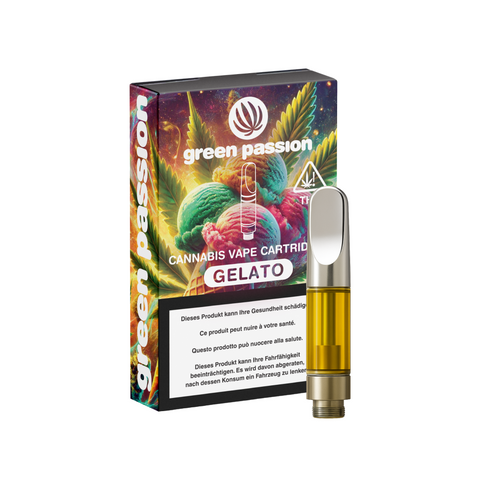
Vape / Vaporizer: Device for vaporizing liquids or plant material. In the CBD sector, there are legal vape products based on CBD. What's inside and how to use it is written on the packaging, so that's exactly where you should check.
Wax describes a soft, wax-like extract consistency. Similar to budder, but a bit firmer. One of the many consistency terms used internationally.
- Weed: Informal term for cannabis. In the CBD world, the term often appears in strain names, e.g., "CBD weed" as an anglicism for CBD blossoms.
- White Label: Products produced by one manufacturer but sold under another brand. Widespread in the CBD market.
-
Whole Plant Extract: Extract from the entire plant, not just the blossoms. Contains a broader spectrum of plant compounds.
X, Y, Z: The last letters of the hemp ABCs
Xenos: Not a common scene term, but "xenobiotics" appears in lab contexts: foreign substances that products are tested for, such as pesticides or heavy metals.
Yield: English for "harvest". A key term in the grow scene: How many grams of blossoms does a plant produce? High yield is an important breeding goal for cultivators.
- Zaza: Newer slang (mainly from US rap culture) for especially high-quality, exclusive hemp goods. Now also used for premium CBD blossoms.
- Zero THC: Marketing term for products where THC is below the detection limit, usually isolate-based. Strictly speaking, not always "zero", but below the legal threshold.
- Zone / Zip: Slang for an ounce (about 28 grams) of plant material. Not a standard sales format in CBD shops, but appears in forums and reviews.
Still not enough? The glossary keeps growing
New terms are constantly popping up in the scene, anglicisms mix in, or old slang expressions get recycled. This dictionary is updated regularly so you always stay up to date. And if you're missing a term: Just write to us and we'll be happy to add it.









Comments (0)
There are no comments for this article. Be the first one to leave a message!