
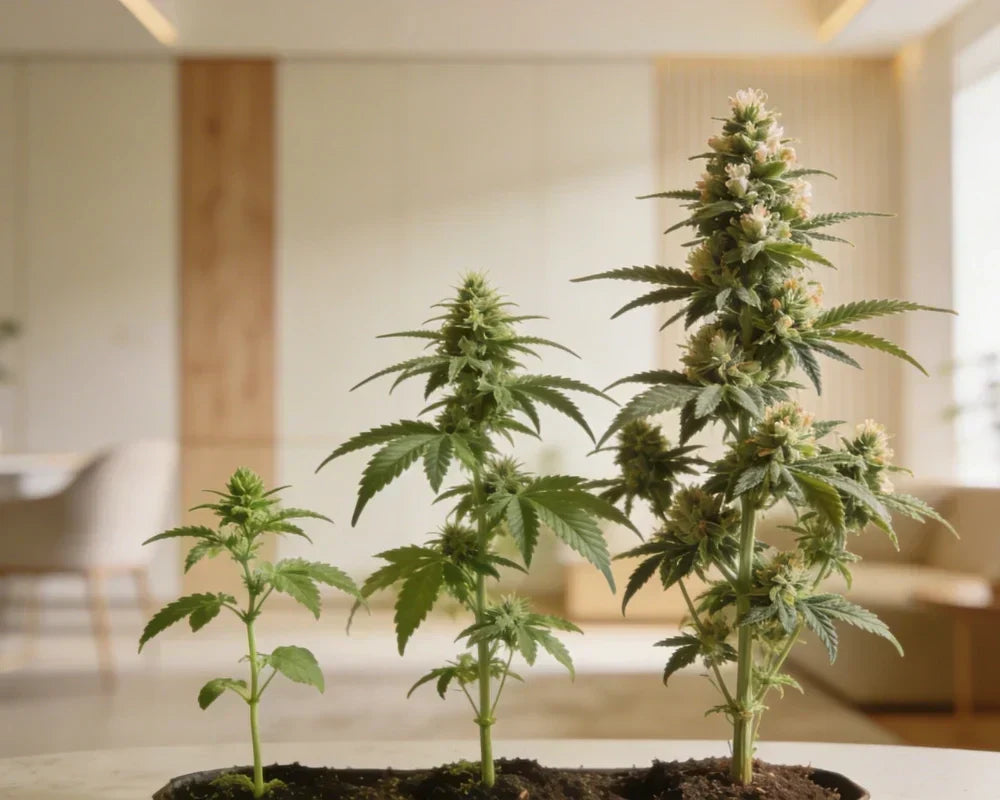
Ten years of CBD in Switzerland: Sounds like an anniversary, a look back, a celebration. For us, it feels like a movie you wouldn’t believe if it hadn’t actually happened. Switzerland, known for watches, mountains, and banking secrecy, quietly became the European pioneer of an entire industry. And we at Green Passion have been there from the very beginning.
No other country in Europe built what Switzerland has since 2016—so early, so consistently, and so independently. Let’s take another look at how things stand now and what the future might bring.
The starting shot was really a legal loophole
It wasn’t a big political decision that led to this. Switzerland became Europe’s CBD pioneer thanks to a simple legal detail: the Narcotics Act defined cannabis as illegal only if it contained more than 1% THC. Anything below that was considered industrial hemp. What almost nobody realized: cannabis varieties dominant in CBD and with less than 1% THC could be legally grown, processed, and sold.
The key point: while the rest of Europe operated with THC limits of 0.2 to 0.3%, Switzerland had already set a 1% limit in the Narcotics Ordinance since 2011. This difference changed everything. The first providers who understood this had a lead of a few months. Green Passion was one of them.
Summer 2016: Zurich as the starting point of a movement
If you were in Zurich back then, you remember that strange feeling: Flower buds in shop windows that looked and smelled like cannabis, with price tags and receipts. Customers bought them with a grin somewhere between disbelief, excitement, and curiosity.
Our first CBD flowers were still an exotic item at that time. Today, they’re their own market segment with clear quality standards, a variety of strains, and real fans who know what they want. Back then, there was no guide, no benchmarks, no reference product. Everything had to be built from scratch.
Why Switzerland and not Germany or Holland?
That’s the question that seems most interesting in hindsight. Holland had decades of cannabis tolerance. Germany had the industry, logistics, and market. France had the farmland. Still, Switzerland was first.
There were concrete reasons for this:
- The 1% THC limit was the first in Europe to create a solid legal framework for CBD flowers, while neighboring countries were stuck at 0.2 or 0.3%.
- Swiss hemp farmers had decades of experience with industrial hemp and could quickly adapt cultivation and processing without starting from scratch.
- Customers’ focus on quality was high from the start, which meant cheap products had a harder time than elsewhere.
- Online retail was established early and made the market scalable without relying on widespread brick-and-mortar stores.
- Each canton developed its own local scene: Bern different from Zurich, Basel different from Lucerne, which made the whole development more dynamic.
This combination put Switzerland in a role it didn’t choose, but one that shaped it. What worked here was later observed, copied, and adapted in other markets.
2017: The hype breaks through
A year after the first shops opened, it was clear this wasn’t just a niche phenomenon. Kassensturz tested CBD products, Tilllate reported, Tages-Anzeiger and online portals picked up the topic. Green Passion appeared in these tests and was named test winner. Since then, we’ve proven ourselves with quality.
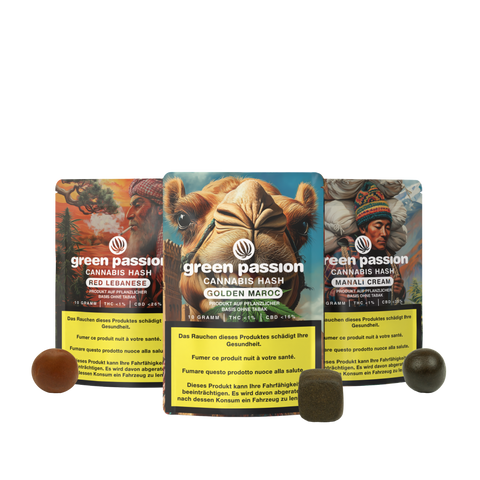
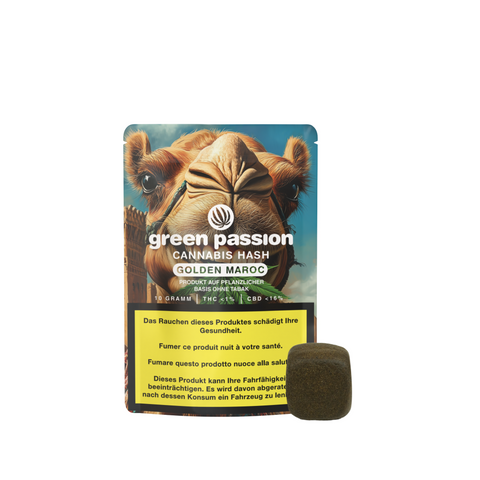
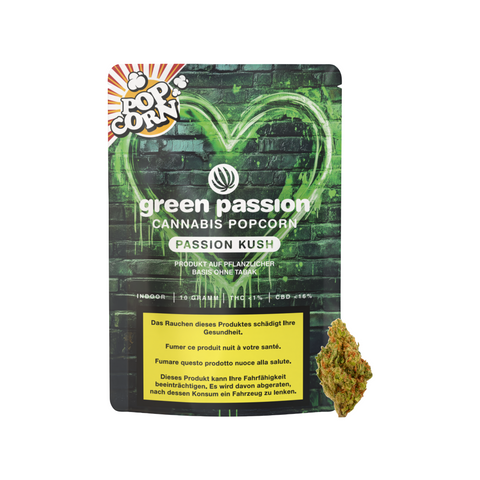
At the same time, the range expanded. Alongside classic indoor flowers, new categories emerged. CBD hash was there early on, long before most of the industry noticed. Every new product category was a test: What does the market want? What meets expectations? What still needs time?
The quality problem: When the market endangered itself
With the hype came the opportunists. Shops popped up selling anything remotely green. Analysis certificates? Optional. Information about origin? Nowhere to be found. The market quickly became confusing.
For Green Passion, this was a crucial moment. Transparency became the core issue: clear product descriptions, lab tests, information about origin. That meant more effort at the time. In hindsight, it was the only sensible decision, because the market quickly answered the quality question itself.
Legal gray areas: Navigating without a map
The 1% limit was clear. What applied around it was much less so. How can you describe products? What counts as an aroma product, what as cosmetics, what falls under other categories? The question of CBD’s legality in Switzerland was never as easy to answer as some thought.
The Federal Supreme Court’s ruling on tobacco taxes for hemp flowers brought more clarity in 2020 and was an important step for the entire industry. You can find the full background in the article on the Federal Supreme Court ruling.
2019 to 2021: The market differentiates itself
From 2019 on, “buying CBD” was no longer a single need. Everything became more diverse, the products more specific. The vape segment grew rapidly. At the same time, specialty products appeared that broadened the market even more:
- Moonrocks for connoisseurs who wanted maximum density and brought a clear demand for quality.
- Various hash consistencies, from creamy to crumbly, catering to different preferences.
- Indoor and Outdoor as a conscious quality signal for different budgets and consumption habits.
Knowing the differences between cultivation methods has become basic knowledge in the community. If you want to learn more, you'll find everything important in the Indoor vs. Outdoor comparison.
Switzerland as an exporter of know-how
Something that hardly shows up in public perception: In recent years, Switzerland has exported not just products, but knowledge. How do you cultivate legally? How do you certify properly? How do you communicate in a regulated environment without falling into legal traps? Companies, consultants, and industry associations from all over Europe have watched what works in Switzerland.
2022 to today: Pilot projects and the next question
While CBD had long become mainstream, discussions started about the next stage. Zurich, Basel, and other cities approved pilot projects for the controlled distribution of cannabis for recreational purposes. This was no coincidence, but the result of years of social change, in which the CBD market actively participated.
For Green Passion, this was a kind of confirmation. CBD hemp was never just a transitional product. It was the beginning of a different cannabis culture in Switzerland, and the way society has developed shows that this path was the right one.
What 10 years really mean
Most brands that started in 2016 and 2017 are no longer around today. What remains are the providers who did their homework. And what becomes clear: quality, legal certainty, and real communication with the community aren't competitive advantages—they're the basic requirements.
Ten years of CBD in Switzerland means, specifically:
- A market that has grown from nothing to a European benchmark, with a THC limit that structurally sets Switzerland apart from all its neighboring countries.
- Hundreds of varieties, product forms, and ways to use them that didn't exist in 2016 and are now taken for granted.
- A community that's become more informed, more critical, and more discerning than anyone would have expected back then.
- Legal developments that, slowly but steadily, have brought more clarity—from the first tobacco tax introduction in 2017 to the ongoing pilot projects.
- And a country that, without a big market and without a cannabis tradition in the modern sense, has built something that all of Europe is watching.
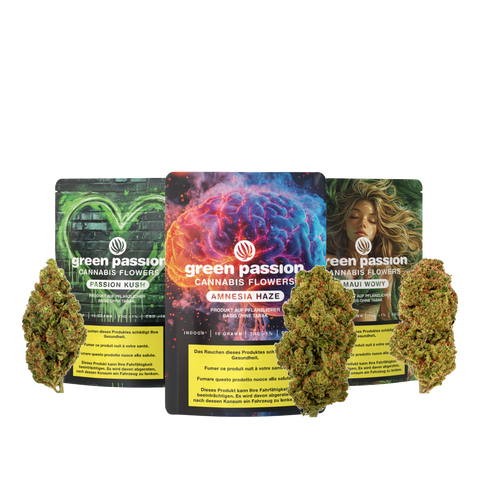
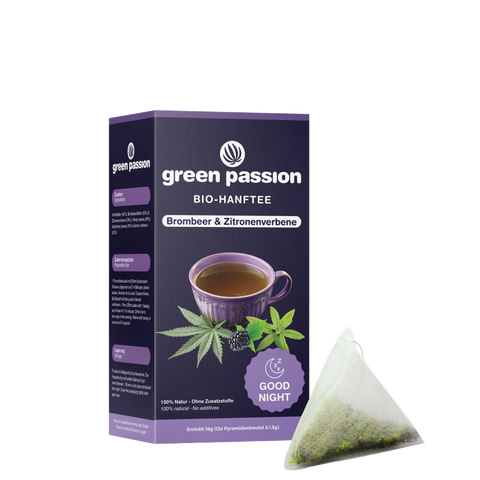
The current selection from Green Passion shows where we stand today: broader, deeper, and on a different level of quality than in 2016. We've kept the same drive as on day one.
What's next
The Swiss market has grown, but it's not done growing. The pilot projects will deliver results. European regulation is moving—slowly and unevenly. New cannabinoids are coming into focus, science is working, and the community keeps evolving. If you know the longer history of hemp in Switzerland, you know: this isn't the end point.
Ten years is a good moment to pause. But it's no reason to stand still.









Comments (0)
There are no comments for this article. Be the first one to leave a message!