
As ready-to-use products
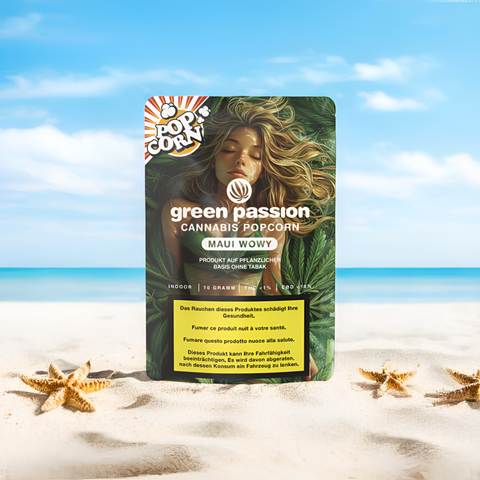
CBD products are also offered in ready-to-use form, sometimes as medicines, as food, as cosmetics, as consumer goods (excluding cosmetics), as CBD flowers (tobacco substitutes), or as chemicals like CBD oil (aroma oil). Ready-to-use products or finished goods are products in the form in which they go directly to commercial or private end users, or are intended for them.
To determine which legislation applies, it's necessary to consider all properties and claims—both implicit and explicit—of a product as a whole and weigh them on a case-by-case basis. For example, some providers' websites state that their products can't be used for medical purposes due to legal reasons. On other websites, you'll find links to pages about the medical uses of cannabis. For such products, therapeutic claims are clearly being made, so they're subject to pharmaceutical law.
That's why you won't find any therapeutic claims in our CBD shop. Below, you'll find the legal requirements for the different product categories and their marketability.
CBD products offered as medicines
Medicines
Ready-to-use CBD products intended for medical use are considered medicines according to Article 4, Paragraph 1, Letter a HMG (SR 812.21) and, according to Article 9, Paragraph 1 HMG, generally can't be placed on the market without approval. Businesses that manufacture, distribute, or dispense CBD medicines always need the appropriate authorization from Swissmedic or the canton.
With the approval of Epidiolex® by the FDA on June 28, 2018, a CBD single-substance medicine was approved for the first time worldwide. This product was also approved in Switzerland under the name Epidyolex® on February 10, 2021. Please note,
– that CBD has a different effect profile than THC and therefore isn't suitable as a THC substitute, and
– that when a medicine is approved, only specific indications regarding effectiveness and safety are reviewed and authorized. In the case of Epidiolex®, the FDA in 2018 only approved it as an add-on treatment for two rare forms of epilepsy; in Switzerland, Epidyolex® was approved in 2021 as an add-on therapy for seizures in patients aged 2 and older with Lennox-Gastaut syndrome (LGS) or Dravet syndrome (DS). For more info on dosage, side effects, possible additional indications, etc., check the relevant professional information*.
Green Passion doesn't sell Epidyolex®; this is just for your information.
Manufacturing and dispensing CBD medicines in pharmacies is possible under Article 9, Paragraph 2, Letter a HMG and in compliance with the relevant pharmaceutical requirements. Besides the general requirements for manufacturing, validation, and prescription processing, keep the following in mind:
- A doctor's prescription is required.
- The prescription should be issued by a specialist for the indications approved in existing medicines.
- If, in exceptional and justified individual cases, (medical) prescriptions are issued for other indications, these should only be processed (manufactured and dispensed) after consulting with the prescribing doctor and with proper documentation.
- CBD used for manufacturing must be produced under the relevant GMP requirements and meet at least the quality standards of monograph C-052 Cannabidiol of the current DAC/NRF.
- Manufacturing in the pharmacy must follow the GMP requirements of the current Swiss Pharmacopoeia (Pharmacopoea Helvetica, Ph. Helv., GMP for small-scale medicines).
Medical device
A CBD product intended for medical use, whose main intended effect in or on the human body is not achieved by pharmacological, immunological, or metabolic means, but whose effect is supported by the CBD it contains, can meet the definition of a medical device according to Article 1 of the Medical Devices Ordinance (MepV; SR 812.213).
The classification of a CBD medical device is based on Article 5 MepV or Annex IX of Directive 93/42/EEC (MDD), especially Rule 13 of Annex IX MDD, which states: "All products that contain a substance which, if used separately, may be considered a medicine as defined in Article 1 of Directive 2001/83/EC and which acts on the human body in addition to the product's effect, are classified as Class III."
The current MepV and MDD will be replaced by new medical device regulations as of May 26, 2021 (new MepV and Regulation (EU) 2017/745 of the European Parliament and Council of April 5, 2017 on medical devices [MDR]). The classification of a CBD medical device remains unchanged, because according to Rule 14 of Annex VIII MDR: "All products that contain a substance which, if used alone, may be considered a medicine as defined in Article 1, Number 2 of Directive 2001/83/EC [...] and which has a supportive function in the medical device, are classified as Class III."
In general, medical devices can contain plant extracts, for example to add color or flavor. In all cases where medical devices might contain substances or plant extracts with a possible pharmacological effect, the manufacturer has to assess each case individually to decide if the product should be classified as a medicine or a medical device and, if it's a medical device, which class it falls under. This also applies to CBD, since it's generally considered to have a pharmacological effect, even though it's not psychoactive.
Anyone who puts a medical device on the market (like manufacturers or distributors) has to be able to prove, according to Article 45 paragraph 2 HMG and Article 9 paragraph 2 MepV, that the basic requirements and the claimed effectiveness or performance are met. The conformity assessment procedure, the necessary certification, and the declaration of conformity are based on Annex 3 MepV (Art. 10 para. 1 MepV).
All products in the CBD shop from Green Passion are neither medicines nor medical devices.
CBD products offered as food
According to Article 4 paragraph 1 of the Food Act (LMG; SR 817.0), food includes all substances or products that are intended to be, or can reasonably be expected to be, consumed by people in a processed, partially processed, or unprocessed state. Medicines, narcotics, and psychotropic substances are not considered food (Art. 4 para. 3 LMG).
The basic requirement for food is that it must be safe (Art. 7 LMG). This means it can't be harmful to health or unsuitable for human consumption (Art. 8 of the Food and Utility Articles Ordinance [LGV; SR 817.02]).
For foods that were not used to any significant extent for human consumption in Switzerland or an EU member state before May 15, 1997, approval from the BLV or authorization from the European Commission is required. These are called novel foods (Art. 15 LGV). This includes cannabinoids like CBD and extracts from Cannabis sativa L. and related products containing cannabinoids used in/as food (for example, hemp seed oil with added CBD, dietary supplements with CBD).
Products from Cannabis sativa L. or its plant parts that had a safe and well-documented significant use as food in the EU before May 15, 1997, are not considered novel foods in Switzerland, as long as the Cannabis sativa L. plant meets the requirements of Article 15 paragraph 1 letter d number 2 LGV. This especially applies to hemp seeds, hemp seed oil, hemp seed flour, and defatted hemp seeds. In Switzerland, herbal tea made from the leaves of the Cannabis sativa L. plant is also not considered a novel food. This tea can be used to flavor food without approval, as long as it's used as a water-based infusion and not in any other form (like concentrated or as syrup).
As part of the approval process for novel foods, the BLV checks if the product is safe and not misleading (Art. 3 para. 1 LGV). The basic requirement for approval is that the product is classified as food and not covered by the medicines law (Art. 2 para. 4 letter d LMG).
For foods containing cannabis, the Ordinance on Maximum Levels for Contaminants (VHK; SR 817.022.15) is also relevant, as it regulates the allowed maximum levels of delta-9-tetrahydrocannabinol (THC) in food.
The note on the labeling of a product based on Cannabis sativa L. that it contains CBD is the same as the label "contains ...". Depending on the case, this and similar notes can be considered nutrition or health claims, or statements about the presence of an ingredient in a product.
If this note is considered a nutrition claim, it has to meet the requirements for using the claim "contains ..." according to Annex 13 of the EDI Ordinance on Food Information (LIV; SR 817.022.16).
To use such a claim for the CBD contained in the Cannabis sativa ingredient, it must be proven that the product contains a quantity of CBD that, according to generally accepted scientific evidence, is suitable to achieve the claimed nutritional effect (Art. 29 para. 2 letter b number 2 LIV).
This note could also be considered a non-specific health claim, for example if it's shown together with certain graphic elements. According to Article 34 paragraph 2 LIV, such notes are only allowed if they're accompanied by a health claim approved under Article 31 paragraph 3 LIV or a health claim from Annex 14 LIV. Currently, no health claims are allowed for CBD. So, a note about the presence of CBD that is considered a health claim is currently prohibited.
That's why our CBD oils don't have any health claims, since they're declared as chemicals.
If the note is considered neither a nutrition nor a health claim, it could be seen as a statement about the presence of an ingredient in the product. Currently, CBD is not approved as an ingredient in food (novel food). So, such a note for CBD is not possible at the moment.
Click here for part 2 of “In what form are CBD products offered?”
As a raw material
Raw materials (as substances or preparations) are subject to chemical law regulations. They're used to make CBD products and are typically marketed to manufacturers. The manufacturers are responsible for proper handling and for following the specific legal requirements for their products.
If raw materials are to be made available to the general public, the supplier (= manufacturer according to the Chemicals Ordinance) must first check, as part of self-monitoring, which possible and likely uses may occur.
If this review reveals or suggests any uses that are subject to special regulations, those requirements must be taken into account.
*Swissmedic: https://www.swissmedicinfo.ch/#section1
FDA: https://www.accessdata.fda.gov/drugsatfda_docs/label/2018/210365lbl.pdf
Sources:




Comments (0)
There are no comments for this article. Be the first one to leave a message!