
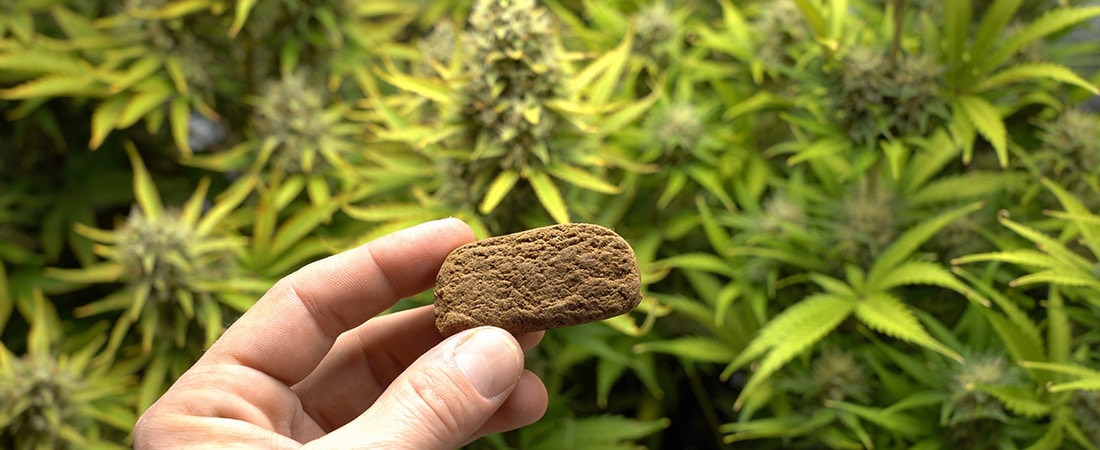
In December 2021, National Council member Léonore Porchet from Vaud submitted a motion to the Federal Council to include CBD hash and cannabis resin (pollinate) under the 1% THC limit. The IG Hanf association also intervened, arguing that cannabis resin with less than 1% THC should be treated the same as CBD flowers with the same THC content. Legally distinguishing between the two products despite identical THC content just doesn’t make much sense.
CBD hash has been legal in Switzerland since August 2022
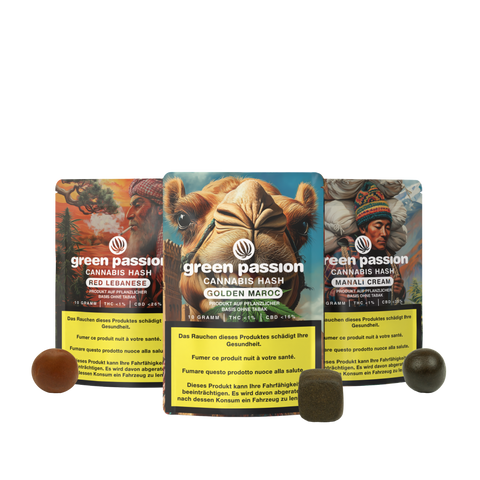
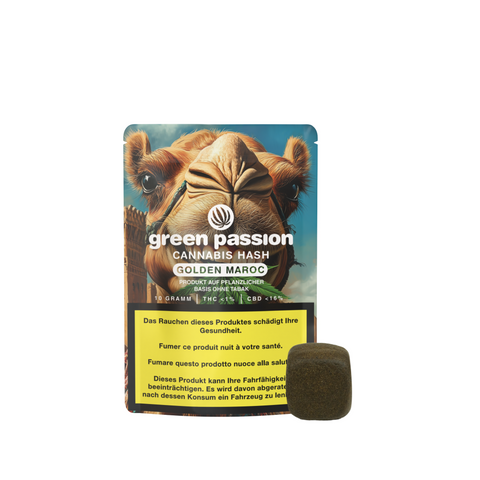
Since August 2022, the 1% THC limit in Switzerland also applies to cannabis resin (pollinate). The interventions have finally paid off: from August 2022, cannabis resin with less than 1% THC is a marketable product in Switzerland and is legally treated the same as CBD flowers and CBD oil.
The different treatment of cannabis resin compared to products with at least 1% THC content had long been a thorn in the side of the Swiss cannabis industry. Back in November 2021, IG Hanf commented on the implementation law and specifically pointed out that allowing different forms of administration should be supported and welcomed.
With her motion to the Federal Council, National Council member Léonore Porchet gave extra weight to the demand to fix what IG Hanf sees as an illogical “technical error” in the Narcotics Act. Only plants or plant parts and preparations containing a total THC content of at least 1% are considered cannabis under narcotics law. In her interpellation, the National Council member from Vaud pointed out to the Federal Council that CBD hash is still treated differently than CBD oils, tinctures, CBD flowers, or cuttings, even after the above-mentioned recognition by the Federal Council.
This request is now being met and the list in the Narcotics Ordinance is being updated so that the 1% THC limit also applies to cannabis resin. With this response from the Federal Council, not only is there now a logical and consistent criterion for classifying cannabis and all cannabis preparations as narcotics, but there’s finally clarity for enforcement too.
This also means that IG Hanf’s statement regarding the implementation law and the current review of narcotics law about lifting the ban on cannabis for medical purposes has been recognized and accepted. The new legislation came into effect this summer, in August 2022, along with the amendment to the implementation law for the Narcotics Act (medical cannabis).
How cannabis resin is made and the legal situation
Hash is a type of cannabis extract made from the resin glands of the cannabis plant. These resin glands produce most of the cannabinoids, making them super valuable. To make hash, these resin glands are separated from the plant and then pressed and heated to create hashish. Buds and their trim are the most important ingredients for this process since that’s where most of the resin glands are. Of course, other parts of the plant can be used to make cannabis resin too, but they contain fewer valuable cannabinoids.
It’s important to point out that just separating the resin glands from the cannabis plant doesn’t make hash yet—it only makes kief. Kief is another form of cannabis extract, but it’s also the raw material for making hash. Only heat and pressure break open and melt the resin glands, which affects the taste, texture, and effects of the finished product.
In short, you can’t make hash without heat and pressure. However, the method used to collect kief can have a big impact on the quality of the hash and create subtle differences. That’s why there are different ways to make hash, since the way you collect kief can determine the type of hash or the final product.
Besides how you collect kief, the plant material you use can also affect the quality of the hash, for better or worse. As mentioned, you can use whole plants to collect kief, but the best kief is found in the buds and their trim.
Hash and its origins
The term and product hashish originally come from Morocco, where the production process has been perfected over centuries. Traditionally, the resin—that is, the actual hashish—is pressed from harvested hemp glands. According to a UNODC study (UNODC = United Nations Office on Drugs and Crime), Afghanistan is the largest producer by yield, but Morocco is still the world’s biggest cannabis-growing country.
The Rif Mountains in Morocco are the main region for this, thanks to great weather conditions for growing cannabis. Kief production has been illegal in Morocco since 1957, but it’s believed to be the main source of income for around 80,000 families, generating more revenue than tourism. Still, the average cannabis farmer there has to get by on what would be a Western European monthly wage for an entire year.
Source:
https://www.parlament.ch/de/ratsbetrieb/suche-curia-vista/geschaeft?AffairId=20214411
https://ighanf.ch/news-aus-bern/
https://www.zamnesia.com/de/blog-die-5-besten-methoden-um-hasch-herzustellen-n922









Comments (0)
There are no comments for this article. Be the first one to leave a message!