
While the production, sale, and use of CBD flowers, CBD oil, and other cannabis products with a THC content of less than 1% have been established in Switzerland for many years, the current ban on cannabis with a THC content of more than 1% for non-medical purposes hasn't led to less use or better health protection. The Federal Council supports an evidence-based approach to cannabis policy: for legal distribution, they recommend strict regulations, as it shouldn't lead to commercialization or encourage more use.
Unsatisfactory – that's often the verdict on the current situation regarding cannabis or THC in Switzerland. People from various fields agree: scientists, health authorities, the justice system, and addiction specialists. The Federal Council shares this view too.
The situation is unsatisfactory on several levels. Even though cannabis with a THC content of one percent (and above) is still banned in Switzerland, use remains high. It's especially common among teenagers and young adults. This age group is particularly at risk, but can still easily buy cannabis products on the black market. On the other hand, adults who use responsibly are also criminalized by the ban.
The black market poses health risks for users. Tests on seized samples show that cannabis can be contaminated with things like heavy metals, mold, or cutting agents. Users also don't really know how much THC is in a product.
While illegal cannabis sales bring in more than half a billion francs a year—untaxed—the costs of use fall on society. Law enforcement also ties up police and judicial resources.
Partly confusing legal situation
It's also unsatisfactory that the current legal situation around cannabis or THC leads to different interpretations and is only partly understandable. For example, in some cantons, only use is fined with a 100 franc penalty, while in others, even possession of a small amount was fined until recently. In a 2017 ruling, the Federal Supreme Court clarified that simply possessing up to ten grams of cannabis for personal use is not punishable and can't be fined.
In 2023, the Federal Supreme Court ruled again that a small amount of cannabis can't be confiscated by the police as long as it's not being used. The fact that a still-banned substance can't be confiscated anymore has caused confusion among police.
In Switzerland, hemp products with less than one percent THC are basically legal. This includes cannabidiol (CBD), which clever producers have marketed as "light" cannabis since 2016. CBD flowers or CBD hash can be smoked as a tobacco substitute, but ironically, the more popular and potentially less harmful CBD drops or CBD oils—if meant to be taken—need either approval as a novel food or as a medicine. To get around the strict requirements for such approvals, some manufacturers have sold their CBD products as fragrance oils or raw materials with no stated purpose—even though people often take them anyway. The cantons deal with false advertising of these CBD products with varying levels of strictness.
Parliament sees a need for action
The partly confusing legal situation and inconsistent enforcement across cantons led Council of States member Thomas Minder to submit a motion for "legal certainty in the production, trade, and use of hemp and cannabis products," which was passed on to the Federal Council. The corresponding report was adopted by the Federal Council in November 2023. It concludes that a comprehensive hemp law covering all possible uses wouldn't make sense, since the use of hemp extracts is already regulated by existing laws.
The report identifies the main challenge not as legal certainty around hemp, but rather the lack of a product category for purely "recreational purposes." This could include both low-THC and THC-containing hemp products for enjoyment.
The Swiss Parliament has recognized the need for action and, in September 2020, passed a legal basis for pilot trials with cannabis for recreational use. These time-limited studies can help develop a regulation for cannabis that fits Switzerland. One step further is the parliamentary initiative by Heinz Siegenthaler, "Regulation of the cannabis market for better youth and consumer protection." It calls for a permanent law to create a legal cannabis market. The social and health commissions of both chambers took up the proposal in 2021, and the legislative project is underway.
New regulation as an opportunity
With parliament working on regulating a legal cannabis market, the Federal Council has outlined in its report how such a plan could be implemented. It also draws on international experience with regulating addictive substances. The spectrum ranges from strict prohibition with an uncontrolled black market to a largely liberalized market with little health protection (see graphic). Between these problematic extremes, there are approaches like decriminalization, non-profit sales, and strict market regulation, which have worked in various countries.
There isn't any data yet from the pilot trials in Switzerland, and internationally, there are only a few experiences with legal cannabis markets. Still, important lessons can be learned from tobacco and alcohol regulation: the most effective way to reduce use is through price measures, like taxes to make products more expensive. After that come measures for protection from secondhand smoke, advertising bans, limiting availability, and also regulating product quality for consumer protection.
Based on these findings, the Federal Council supports a new regulation of cannabis that's evidence-based and focused on public health. They point out that cannabis shouldn't be taken lightly. While the health risks from occasional use are relatively low compared to other psychoactive substances, heavy, long-term use increases the chances of mental health issues, like depression or anxiety disorders, or developing a psychological dependence. Young people are especially at risk. That's why, from the Federal Council's perspective, protecting minors is super important.
Smoking cannabis also raises the risk of respiratory diseases. However, controlled, legal access to cannabis can help users get better information and handle the substance more safely. Cannabis shouldn't be promoted or overly commercialized. That's why the Federal Council's report recommends organizing legal cannabis sales on a non-profit basis.
Definition of Cannabis
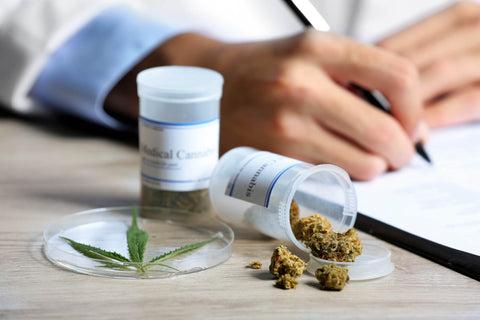
Cannabis sativa is the botanical name for the hemp plant. Botanically, "hemp" and "cannabis" are the same thing. In practice, there's a distinction between low-THC industrial hemp used for seeds and cooking oil or plant fibers, low-THC hemp flowers used for flavorings or as a tobacco substitute (usually high in CBD), and high-THC drug or medical cannabis, which is also used to make medicines.
Legal vs. Botanical Definition
While hemp and cannabis are the same botanically, under narcotics law, only hemp with one percent or more THC is considered cannabis.
Source: Spectra, Issue No. 139, Dec. 2023: Cannabis Policy – What's Next?








Comments (0)
There are no comments for this article. Be the first one to leave a message!