

In Switzerland, cannabis or THC is mostly used by young people, which is why prevention efforts focus on this group. The FOPH supports cantons and municipalities in developing and implementing prevention measures, funds research projects, and runs the online portal SafeZone.ch, an online counseling service for addiction issues.
Among illegal drugs, cannabis is the most commonly used: More than a third of the Swiss population aged 15 and over say in surveys that they've tried cannabis at least once in their life. Data from the "Swiss Monitoring System for Addiction and Non-Communicable Diseases" (MonAM) shows that mainly teenagers and young adults use it: In 2022, 7.5 percent of 14- and 15-year-olds said they had used cannabis at least once in the past 30 days. This share is much lower among older people (aged 15 to 64), at 4 percent.*1 Notably, people aged 20 to 24 use it the most, but use drops as people get older. Especially between 25 and 30, use often drops significantly—usually a bit earlier for women than for men.*2 Even though cannabis use is widespread in Switzerland, only a small part of users have problematic use.*3

Accompanying research on cannabis regulation
The fact that cannabis use is widespread in Switzerland despite being illegal, and especially among young people, raises questions about regulation. The FOPH has created a research agenda for this, which scientific cannabis pilot projects can follow. These projects can show the pros and cons of different sales models (pharmacies, non-profit clubs, cannabis social clubs, for-profit cannabis shops, etc.). Other questions, like pushing back the black market, supporting young users, effective taxation, or product safety, are also being studied by the FOPH as part of its research. With monitoring—like MonAM—the FOPH also tracks changes in use and other key indicators to study changes at the population level.
Prevention especially for young people
No matter what future regulation might look like, prevention plays a key role when it comes to cannabis. The FOPH supports cantons, municipalities, and organizations in developing and carrying out measures for prevention, early detection, and treatment of addiction issues. The focus is on early detection and early intervention for at-risk teens and young adults, especially with activities in schools.
Prevention measures supported by the FOPH include running the "bildung + gesundheit Netzwerk Schweiz" platform and promoting "schulnetz21." The FOPH also runs the SafeZone.ch portal, an online counseling service for addiction issues. It offers free and anonymous advice for users, their families, and professionals.
Growing risks in the substance market
When talking about possible cannabis regulation, the situation on the black market is also key. The FOPH provides the relevant data and background here too. High-potency products and those cut with synthetic cannabinoids are a problem. The THC content in cannabis products has especially increased: While the average THC content was at a low of 10.7 percent in 2007, by 2022 the average was 24 percent.*4
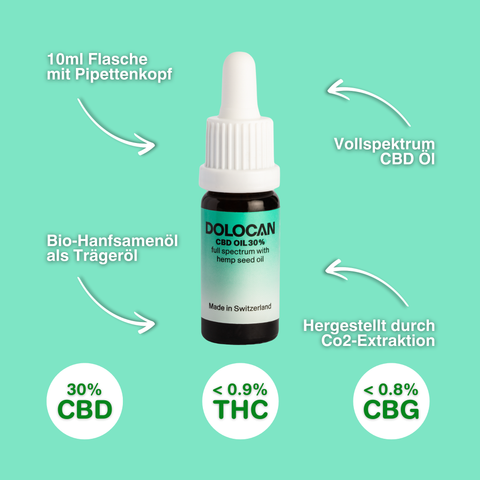
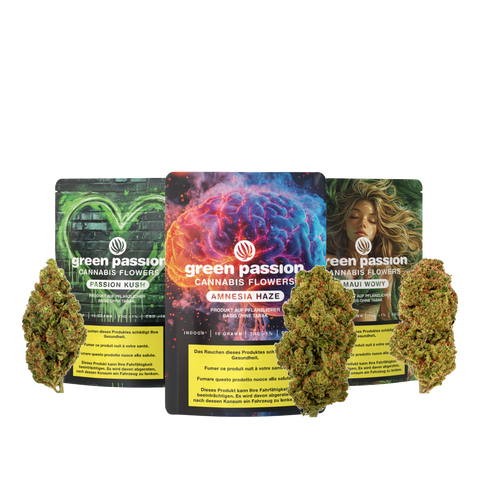
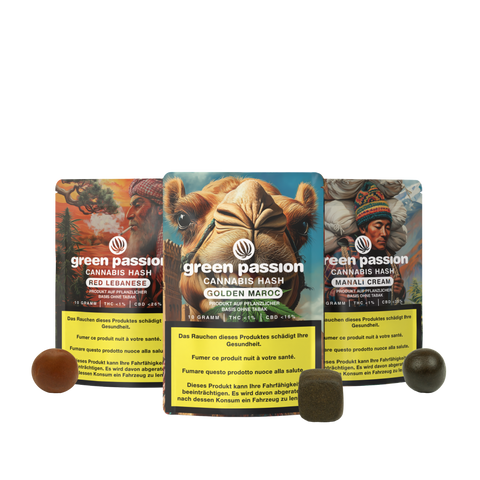
Using legal hemp products with less than 1% THC, like CBD flowers, CBD hash, or CBD oils, doesn't come with these risks. So buying CBD products like CBD weed is better than buying cannabis from the black market.
Economic impact of cannabis regulation
Every year, 56 tons of marijuana (cannabis flowers) and hash are sold on the black market in Switzerland, with a turnover of about 580 million francs. That's according to a study co-financed by the FOPH.*5 The study also modeled the economic effects of three different regulation scenarios: a highly regulated market, a free market, and a non-commercial market with home growing and user clubs.
In a strictly regulated market, the highest annual tax revenues could be expected (464 million francs) and the lowest costs for society (direct law enforcement and justice costs per year: 0.4 million francs; annual health costs: 22.5 million francs). A deregulated legal market, on the other hand, would bring in the lowest tax revenue (11.5 million francs) and the highest costs for society (health costs: 29.9 million francs, law enforcement and justice costs: 0.3 million francs).
Sources:
*1 MonAM, 2017. Cannabis and other drugs.
*3 Obsan Report 03/2023. Mental Health – Autumn 2022 Survey
*4 Swiss Society for Forensic Medicine SGRM, Forensic Chemistry Group, 2022 THC Statistics.
*5 Hoff, O. (2022): Cannabis in the Swiss economy. Zurich and Geneva: Seismo Verlag.
Spectra, Issue No. 139, Dec. 2023













Comments (0)
There are no comments for this article. Be the first one to leave a message!