
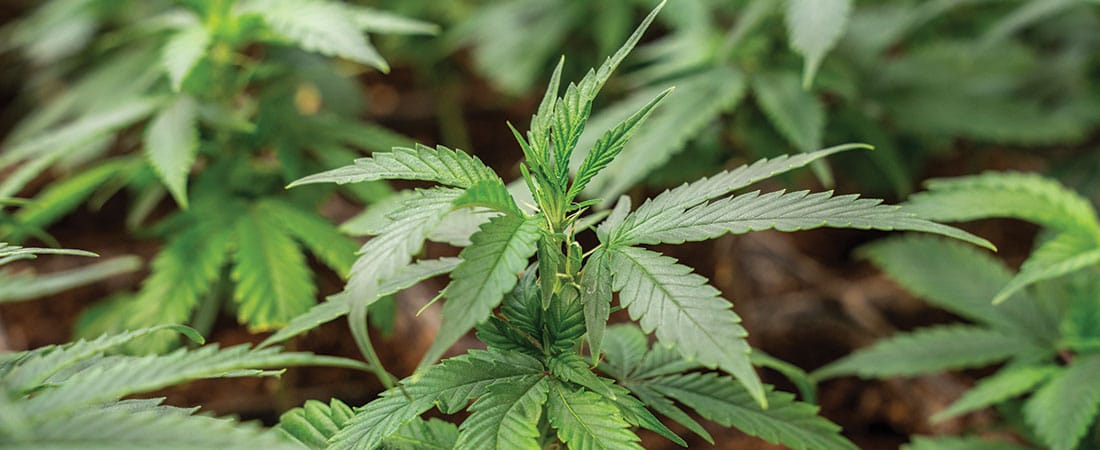
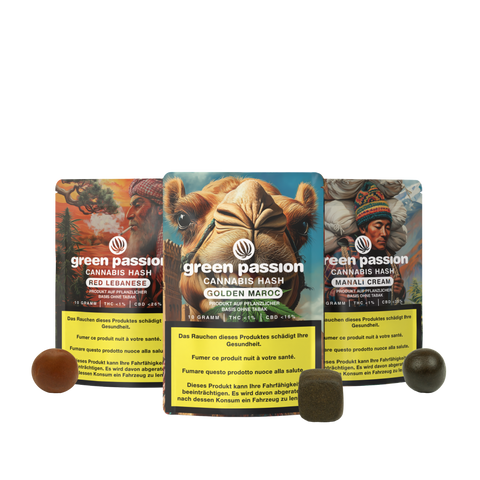
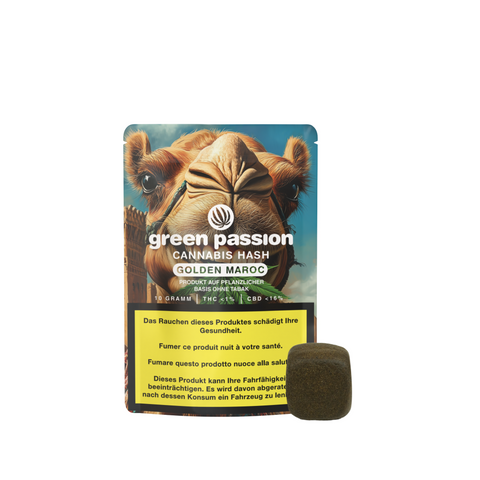
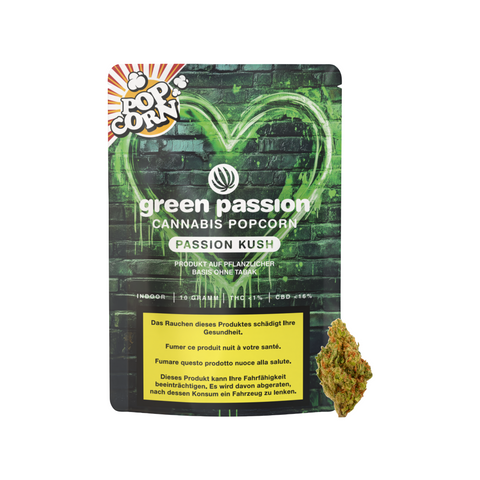
Recently, you can legally buy cannabis in stores in Switzerland. The hype is huge. But how good is the weed, and who grows it? The legal hemp business is booming. Some sell it as a tobacco substitute (and pay tobacco taxes), while others try to avoid the taxes by selling it as a raw material. In Zurich, you can already buy legal weed at about ten locations. Shops have also opened in Bern and Basel. If you don't live in the city, you can have legal cannabis delivered to your home by courier. Online sales are especially booming.
"What you do with it is up to you," says Agi Petrova as she hands me a small jar of hemp buds. She sells the legal cannabis as a raw material. "Purple Haze" is her best product.
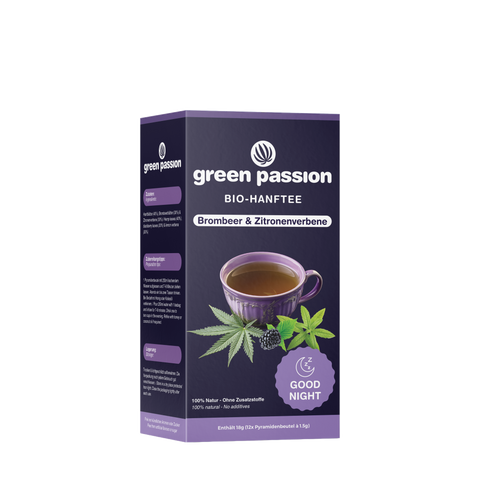
Five grams cost seventy francs. Petrova is the manager of Green Passion, a hemp shop at Zurich's Lochergut.
When I get home, I mix the weed with a bit of tobacco and roll myself a joint. As a non-smoker, I first notice the nicotine. But even while smoking, a cozy, relaxed feeling sets in. I get a bit sleepy, but my head stays totally clear. After smoking, I feel like I'm wrapped in cotton wool for about an hour. Then the feeling slowly fades.
If you can call it a "buzz," it was mild and pleasant.
Right after the last raid
Ossingen in Zurich's wine country. Next to an old farmhouse stands a large greenhouse, filled with hemp cuttings as far as you can see. I meet a producer. His company was the first to bring cannabis with less than one percent THC to the market as a tobacco substitute. "My lawyer submitted the first request to the Federal Office of Public Health back in 2004. At the beginning of August 2016, we finally got the green light," says the entrepreneur.
Legally, selling hemp with less than one percent THC has been allowed since 2011. That's what the Federal Office of Public Health (BAG) decided back then. "But before we got the permit, only a few dared to sell legal hemp," he explains. "That's why we're only seeing this boom since last summer." The producer and entrepreneur has been in the hemp business for about two decades. In the mid-nineties, when Switzerland seemed to be heading toward hemp liberalization for a short time, he was one of the first to grow hemp on a large scale in Switzerland.
Around the turn of the millennium, all grass shops and their production were shut down by the authorities. He was affected too: In September 2000, two squads of police stormed his property. Even a helicopter was involved. "I got a three-year ban on working with hemp and had a case against me, but it was dropped in 2009," he says.
After the hemp shops closed, the cannabis business largely fell into the hands of organized crime. That led to more violence. The use of firearms in the illegal hemp trade is no longer unusual.
In the summer of 2015, they experienced the last raid. He and several employees spent a day in police custody. The prosecutor wanted all the plants cut down. But he insisted his hemp be tested and threatened to sue for damages. The police labs finally gave the all-clear: The THC content was low enough.
THC versus CBD
THC (tetrahydrocannabinol) is responsible for the actual "buzz" when you smoke, thanks to its psychoactive effects. THC is a cannabinoid. Cannabinoids are chemical compounds that you won't find in any other drug. Around 120 of these compounds are known today. THC is the most famous one.
In recent years, a second cannabinoid has come into focus: cannabidiol (CBD). Unlike THC, CBD isn't psychoactive.
Right now, a lot of producers are trying to breed their hemp to have as much CBD as possible. The higher the content, the stronger the effect.
In a Zurich suburb, T.B. grows legal hemp with a high CBD content. "Business is great, we've already sold everything before the harvest," he says. "About two years ago, I emailed the prosecutor and told her I was going to grow cannabis with less than one percent THC." The prosecutor totally freaked out. "She asked if I was messing with her and told me my plan was highly illegal," says T.B. That's when he realized that law enforcement didn't really know the legal situation. But he didn't let that stop him.
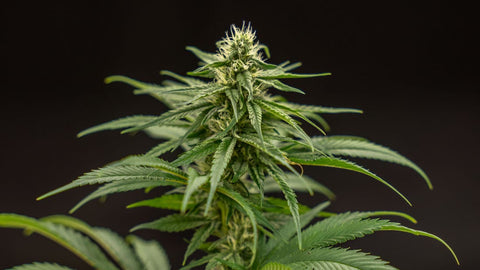
Now, T.B. has a room with a total of 1,125 plants. "Breeding hemp with less than one percent THC and a high CBD content is a long process," T.B. explains. To get these plants, he crossed low-THC industrial hemp with high-quality illegal smoking hemp. "The plants should have as little THC as industrial hemp, but the taste and look of indoor plants." It took him a full two years to be happy with the result.
"Breeding is the only thing I could be prosecuted for," he says. Because for that, he needs plants with a higher THC content. He doesn't want to show me his production room. He was recently warned: Someone wants to steal his mother plant. "Right now, there aren't many producers, and everyone is trying to breed a better plant than the competition," says T.B.
Is the CBD bubble about to burst?
"The demand for CBD hemp will never be as big as for illegal hemp," says the producer and entrepreneur. How the market will develop is still hard to say. "At first, everyone is curious and wants to try it out."
Right now, demand is high and supply is tight. "Everyone wants to get into the business now, but soon the price will drop," says T.B. In the end, only the big producers who offer high-quality products will survive, he thinks.
Just by looking, it's impossible to tell legal hemp from illegal. If the police check you, they'll confiscate legal hemp too.
Sellers and producers therefore distance themselves from any medical effects and ask customers to make their own experiences.
According to the Swiss Medical Association, CBD can be prescribed by doctors for moderate to severe spasticity in multiple sclerosis (MS). For that, doctors have to show that the disease severely affects quality of life and that other therapies haven't worked.
Source: woz.ch (12.01.2017)









Comments (0)
There are no comments for this article. Be the first one to leave a message!