
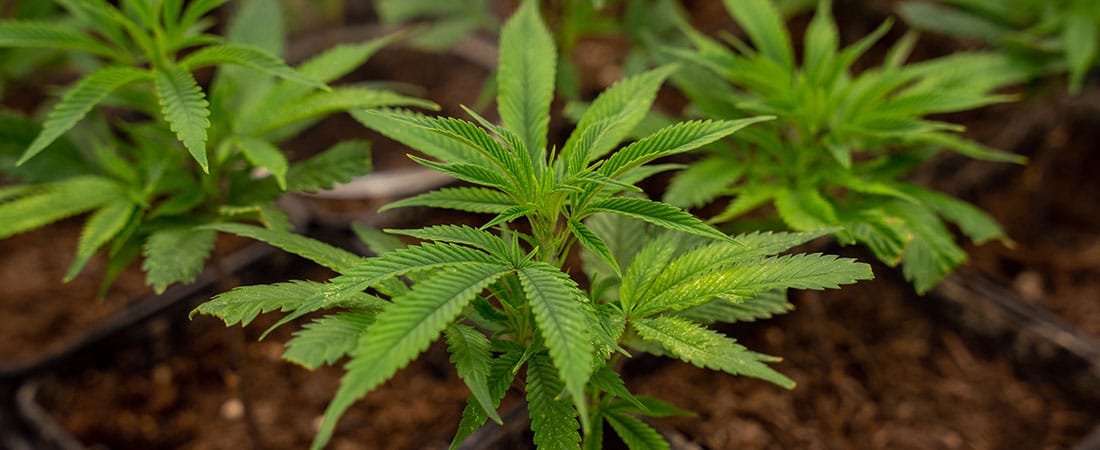
Hemp, or Cannabis in Latin, is considered one of the oldest cultivated plants in the world. Because of a ban in the 1920s, its positive qualities as a useful crop have largely been forgotten. Find out how this plant can be used as food, medicine, or raw material—and why it was banned.
As early as 10,000 BC, hemp was cultivated in China as a useful and medicinal plant. The nutrient-rich seeds were an important food, and the fibers were used as raw material. From China, hemp spread all over the world. According to the “German Hemp Association,” the oldest finds of hemp seeds in Europe are about 5,500 years old and come from the Tübingen area.
From ancient times to the modern era, hemp was an important raw material. Around 800 AD, Charlemagne issued an estate ordinance that also regulated hemp cultivation. Starting in the 13th century, hemp was used to make paper in Europe. The first paper mills were built, and Gutenberg printed his famous Bible on hemp paper.
Criminalization and Legalization
So how did cannabis get its bad reputation as a “dangerous drug” after being used by people for all sorts of things for thousands of years? The roots of cannabis criminalization go back to the USA in the 1920s and 30s.
In 1937, the “Cannabis Tax Act” came into effect, supposedly to fight drugs. It slapped a ridiculously high tax of $100 per ounce on buying cannabis. The cannabis tax didn’t bring a single dollar into the state’s coffers, but that wasn’t the point anyway.
As we know now, cannabis criminalization wasn’t something health officials or doctors wanted. The marijuana tax was pushed through Congress on June 14, 1937, behind the back of the “American Medical Association (AMA)” and with a blatant lie (“The AMA fully agrees!”).
The main figure behind cannabis prohibition was Harry J. Anslinger (who, by the way, had Swiss roots). As “Commissioner of Narcotics” from 1930 to 1962, Anslinger campaigned for a sweeping international ban on cannabis. Just five years after the marijuana tax, in 1942, he managed to get pharmaceutical cannabis products banned in the USA.
Corporate Interests vs. Cannabis
Harry J. Anslinger acted in the interests of his father-in-law, Andrew W. Mellon. Mellon was the US Secretary of the Treasury from 1921 to 1932. Under his influence, the “Federal Bureau of Narcotics” was created in 1930, and Anslinger was put in charge. In this role, Anslinger served and benefited both Mellon’s financial interests in the auto and oil industries and the corporate interests of Du Pont (chemicals) and General Motors (automobiles), both owned or controlled by Pierre S. du Pont.
Du Pont produced synthetic fibers and plastics (like nylon, patented in 1938), as well as additives for gasoline and sulfites for wood-based paper. This matched the business interests of publisher William R. Hearst, who owned America’s largest newspaper chain, forests, and paper mills. When new harvesting machines made paper production from hemp profitable, Hearst’s press launched a massive disinformation campaign. For example, they spread stories that Black people and Mexicans, under the influence of marijuana, raped white women.[vc_single_image image=”37585″ img_size=”full” alignment=”center”]The real goal of cannabis criminalization was to wipe out industrial hemp as a source of paper, bio-fibers, and bio-energy. The shake-up in the medical world was just collateral damage.
Between 1850 and 1937, official American pharmacopoeias recommended cannabis as a remedy for over 100 illnesses. Around 1900, cannabis products made up 50% of all medicines sold in the USA. Until 1937, muscle ointments and rheumatism plasters were mainly made from cannabis extracts. All of these medicines disappeared with cannabis criminalization.
In Switzerland, cannabis was still listed in the official pharmacopoeia until the early 1970s. Pharmacies, for example, used to make corn remover products with cannabis.
The legalization of cannabis is happening worldwide. More than half of all US states have now fully or partly legalized the former “drug,” and Canada has become the world’s largest fully legal cannabis market. In Europe, prescription cannabis is already available with fewer restrictions than in Switzerland in countries like Germany, Portugal, Italy, Greece, the UK, the Netherlands, Norway, Finland, Poland, Czech Republic, Cyprus, Croatia, and North Macedonia.
There was even a movie made about this in 1936 called “Reefer Madness”:
Further links on the topic
https://www.aargauerzeitung.ch/schweiz/am-anfang-der-weltweiten-verteufelung-des-hanfs-stand-ein-schweizer-in-den-usa-130092700
https://www.planet-wissen.de/natur/pflanzen/hanf/pwieharryanslinger100.html







Comments (0)
There are no comments for this article. Be the first one to leave a message!