
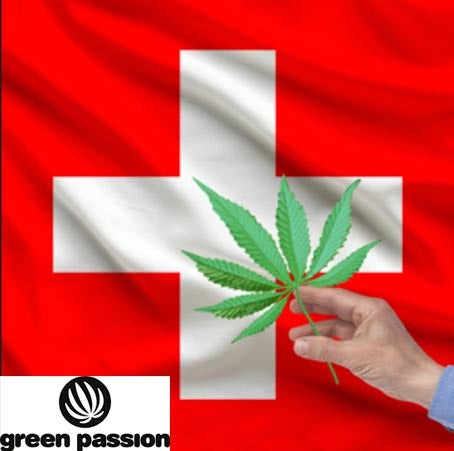
Bern, 01.11.2023 –
Cannabis is regulated by different laws depending on its intended use. A report provides an overview and points out where action is needed. The Federal Council recommends sticking to a differentiated regulation based on the purpose of use. At the same time, it outlines how cannabis for recreational use could be newly regulated. Any new regulation should put health protection at the center. The Federal Council adopted the report at its meeting on November 1, 2023.
The hemp plant is used in many ways. On one hand, industrial hemp is grown for industrial use and provides fiber for insulation materials and clothing, seeds for edible oil, and hemp flowers for making tobacco substitutes or cosmetics. On the other hand, drug-type hemp is used to make medicines or substances with the psychoactive ingredient tetrahydrocannabinol (THC). The report discusses the different uses of cannabis and highlights where regulation and enforcement need improvement. Cannabis for recreational use is still banned in Switzerland. There are ongoing efforts in parliament to change this. A controlled, legal access to cannabis can reduce the risks of cannabis use. From the Federal Council’s point of view, though, cannabis should not be promoted or overly commercialized as a result. The Federal Council recommends that any new regulation of cannabis should be based on scientific evidence and international experience, and take into account the results of pilot projects with cannabis.
The report also states that, for medical cannabis, there is currently no further need for legislative action. On August 1, 2022, the ban on cannabis for medical use was lifted. Since then, doctors no longer need a special permit from the FOPH to prescribe THC-containing cannabis medicines. Cannabis medicines are still only reimbursed by mandatory health insurance in individual cases, since their effectiveness has not been sufficiently proven. The federal government is conducting a multi-year data collection on treatment with cannabis medicines, which should provide new insights. But above all, more clinical research is needed in this area. The situation is different again for low-THC industrial hemp.
Industrial products made from it are not subject to narcotics law. The report shows that these products are regulated depending on their use under pharmaceutical law, food law, chemical law, tobacco product law, or product safety law. In some cases, this can lead to difficulties in distinguishing between categories. Still, the Federal Council believes that the legal framework for the economic use of low-THC hemp is generally appropriate and largely sufficient. Overall, the Federal Council does not consider a comprehensive regulation of hemp or cannabis in a single law to be sensible, as this would create a “special case hemp.” However, it recommends that parliament approach any possible legalization of cannabis for recreational use cautiously, base it on scientific evidence, and put public health protection at the center.
The report was prepared in response to the Thomas Minder postulate “Legal certainty in the production, trade, and use of hemp/cannabis products” (21.3280).
Legal Certainty for Cannabis Products
Cannabis is regulated by different laws depending on its intended use. A report provides an overview and points out where action is needed. The Federal Council recommends sticking to a differentiated regulation based on the purpose of use. At the same time, it outlines how cannabis for recreational use could be newly regulated. Any new regulation should put health protection at the center. The Federal Council adopted the report at its meeting on November 1, 2023.
The hemp plant is used in many ways. On one hand, industrial hemp is grown for industrial use and provides fiber for insulation materials and clothing, seeds for edible oil, and hemp flowers for making tobacco substitutes or cosmetics. On the other hand, drug-type hemp is used to make medicines or substances with the psychoactive ingredient tetrahydrocannabinol (THC). The report discusses the different uses of cannabis and highlights where regulation and enforcement need improvement. Cannabis for recreational use is still banned in Switzerland. There are ongoing efforts in parliament to change this. A controlled, legal access to cannabis can reduce the risks of cannabis use. From the Federal Council’s point of view, though, cannabis should not be promoted or overly commercialized as a result. The Federal Council recommends that any new regulation of cannabis should be based on scientific evidence and international experience, and take into account the results of pilot projects with cannabis.
The report also states that, for medical cannabis, there is currently no further need for legislative action. On August 1, 2022, the ban on cannabis for medical use was lifted. Since then, doctors no longer need a special permit from the FOPH to prescribe THC-containing cannabis medicines. Cannabis medicines are still only reimbursed by mandatory health insurance in individual cases, since their effectiveness has not been sufficiently proven. The federal government is conducting a multi-year data collection on treatment with cannabis medicines, which should provide new insights. But above all, more clinical research is needed in this area. The situation is different again for low-THC industrial hemp.
Industrial products made from it are not subject to narcotics law. The report shows that these products are regulated depending on their use under pharmaceutical law, food law, chemical law, tobacco product law, or product safety law. In some cases, this can lead to difficulties in distinguishing between categories. Still, the Federal Council believes that the legal framework for the economic use of low-THC hemp is generally appropriate and largely sufficient. Overall, the Federal Council does not consider a comprehensive regulation of hemp or cannabis in a single law to be sensible, as this would create a “special case hemp.” However, it recommends that parliament approach any possible legalization of cannabis for recreational use cautiously, base it on scientific evidence, and put public health protection at the center.
The report was prepared in response to the Thomas Minder postulate “Legal certainty in the production, trade, and use of hemp/cannabis products” (21.3280).
Legal Certainty for Cannabis Products










Comments (0)
There are no comments for this article. Be the first one to leave a message!